Showing posts with label Building. Show all posts

Saturday, May 13, 2017

Porch trim details for dollhouse


I am sharing this just incase someone out there needs lots of circles with some depth to them. I came up with a fairly easy way to make custom ones from paper.


After I determined the width I needed my circles to be as well as the inside circumference I wrapped/glued paper around a wooden dowel. This paper is called quilling paper and you can get it at craft stores in many colors.


I cut a square piece of mat board and then cut a hole in the center of a piece of wax paper. Then put the wax paper on top of the mat board and super glued the dowel to the mat board through the hole.
Then I used tape to secure the mat board to the cutting board, plus any parts of the wax paper that had curled up.

I did a few tests to determine how many pieces of quilling paper I needed to get the thickness I desired. Then glued them together as needed with wood glue.

Shown above is the start of making my first circle. Run the paper over your nail between your fingers to get a slight curl. Lay the end flat on the table and put a tiny bit of glue at the end on that one side.


To start, use a toothpick to help keep the paper flat to the wrapping template (The dowel glued to mat board) and then wrap the paper around it so it sticks to itself. DO NOT glue the strip to the wrapping template. The glue you put at the end of the paper will be on the outside when wrapped.
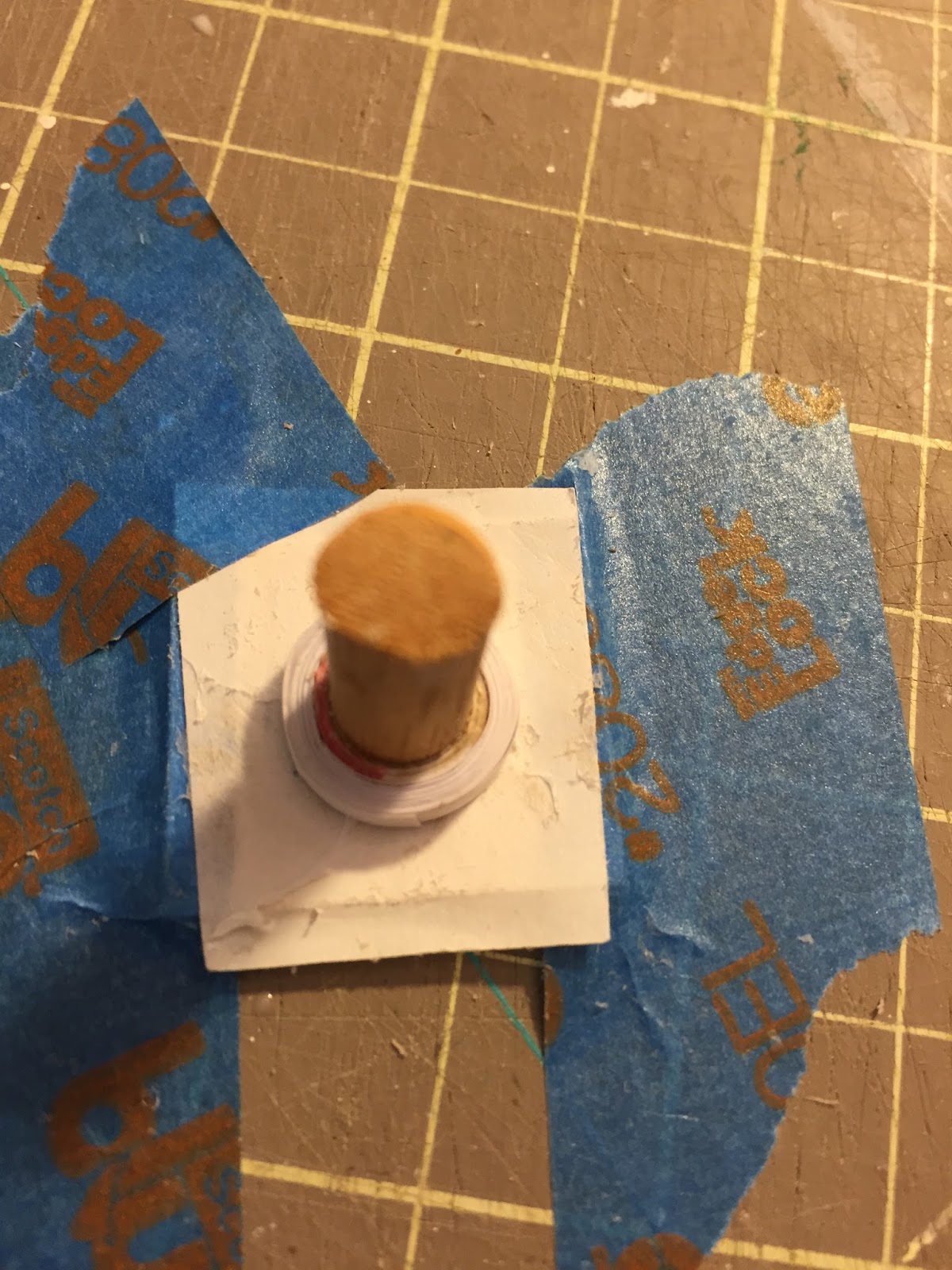

As you are wrapping, put tiny dots of glue along the inside of the strip of paper and wrap and push all around to be sure it is staying flat to the wax paper. This will go faster once you get the hang of it.
I put my wood glue into an empty Elmer's glue bottle to get the better nozzle, Keep your glue nozzle barely open to get small dots.

Keep wrapping and pressing then add more dots and wrap and press. Once you get to the end put glue at the end of the strip and wrap and press all around the sides of the circle to secure. Immediately slip your nails under the circle and wiggle it off the wrapping template.

Lay flat and press under a piece of mat board. If it looks like it lost the circle shape then slip your knife or needle tool handle inside and press while rolling it.
Whip of the wax paper and wrapping template to be sure no wet glue is there and make another. I found it best to only make 3 at a time and give any stray glue on the template time to dry. Otherwise your circle will get stuck and be ripped apart when you try to remove it.


Once dry, sand it on both sides with fine sandpaper.


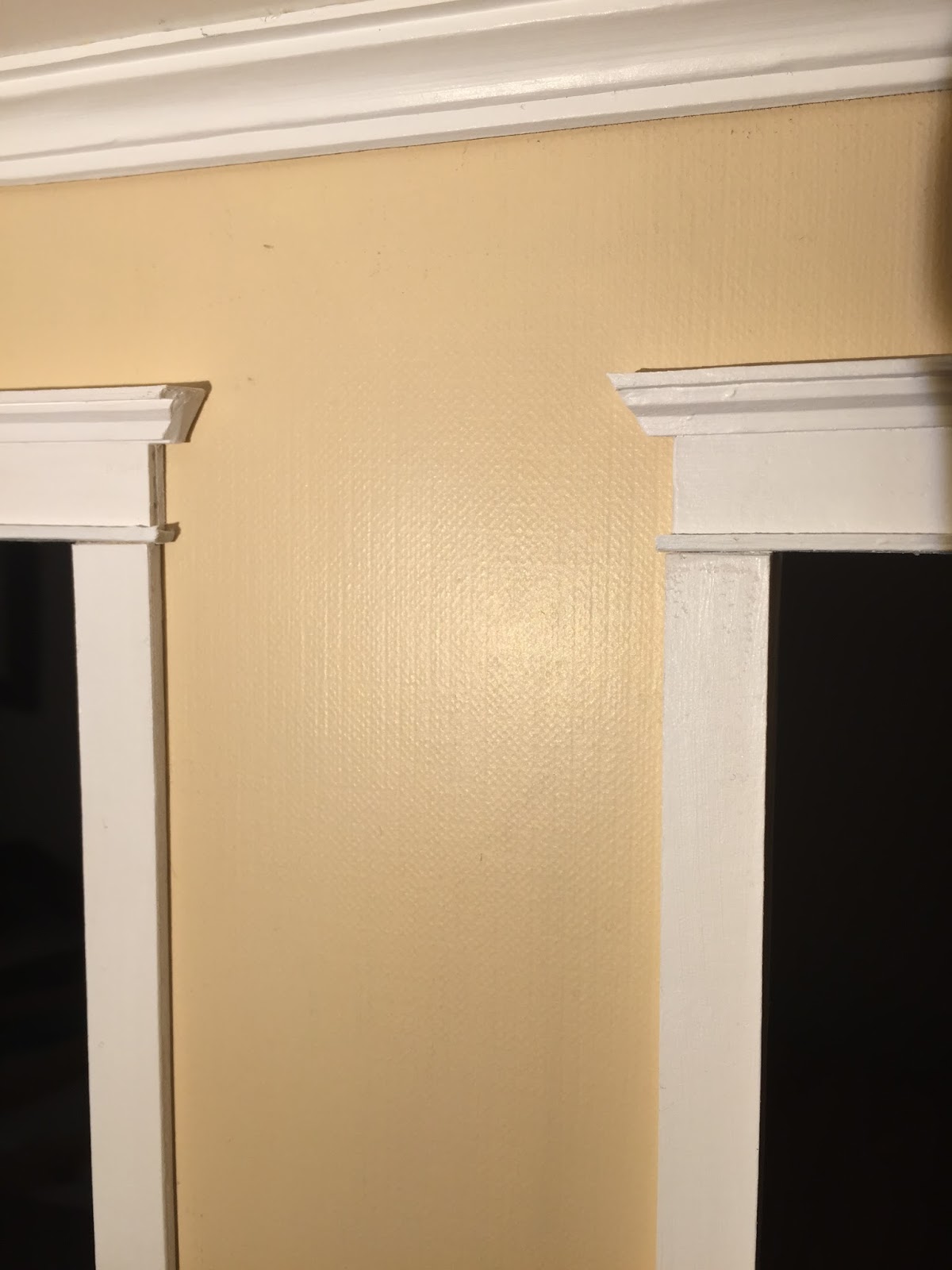
I built my rails upside down. Not shown, but I braced the bottom rail (shown as the top in the above photo) against a long flat surface (sharpening stone shown above) and glued each circle to it with a strip of mat board in between. Then added the corner posts and the top rail which is wider than the bottom.


I made the smaller one shown above first and hand-painted it. Very difficult to get in all the crevasses. So for the longer one I used white spray pant and only hand-painted the top rail.


This is a great way to make circles for anything you need around the dollhouse!

Sunday, February 12, 2017

Dollhouse corbels


I needed to make lots of corbels for the Kinfeld.

I decided to try to make clay corbels using a mold.

To see how I made the initial corbel for pressing in the mold click HERE and scroll down.


 Scoop the white and the purple in the same amounts.


Knead in your hand until they are mixed.


Once they are dry, sand and paint them. I discovered if they dried in the clay they tended to curve. So I immediately took them out and patted them on the table to keep them flat.


For the very small ones I cut a long piece of molding into small sections (shown below). My blade teeth were not fine enough so I had to spackle and sand the sides. I would recommend putting a better blade on your band saw so you won't have to do this step!


Still have some touching up to do, but there they are!

Sunday, May 15, 2016

Dollhouse floors and walls

Because I was trying to keep my budget very small I decided to print my own wood floors. In real life you can’t see gaps between planks and the same with a 1:12-scale print out. 
First I selected a seamless pattern image from the Internet. In some cases I couldn’t find one so I had to make alterations in Adobe Photoshop. Once the files was ready I filled the floor space measurement with the pattern.  
I will be showing how I did this using my Kinfeld hall floor as an example. This was the most difficult because room because I added a border all the way around as I did for the dining room space and this room had the stair hole in it.
I carefully measure the space and set my computer file up as such.

Photoshop has a “layers” option so I built the floor up using that feature.
First I pieced together a herringbone pattern then I added the dark wood trim and the planks outside of that.


Then I printed it out on two legal sheets (my printer won’t go to 11x17).


Then I coated it with a water soluble satin varnish. Because this is an ink jet print it will smear when it gets wet. You can spray it with a fixative (like one that is used for charcoal drawings) if you like, but I just went for it.
I made fast brushstrokes keeping the varnish thin with no thick streaking. Once dry, I took my time and did a complete coverage with a second coat and let it dry.

I cut to piece it together along the wood pattern lines. So the cuts were between the planks.


I used Yes paste to adhere it to a very heavy water color paper. For the downstairs dinning room I adhered it to mat board. 
Yes paste is tricky when you have to butt join two piece together, so practice first. I use this adhesive for my mixed media art because once it’s down and dry it won’t peel up over time.
Scoop a credit card in the jar and spackle it down over your paper in a thin layer. Be sure to go over and off all the edges. If it does peel it will be because you didn’t hit the edges. 
Burnish it down with a credit card over a pice of wax paper. I place a sheet of wax paper and heavy books on it over night.


Once it’s dry and flat, trim out the watercolor paper with the floor print on it and placed it inside the house using more Yes paste or wood glue. Lay wax paper over it and burnish it down with a credit card. Lay something on it as it drys to be sure it’s flat.

I had some white showing through a section of the join so I used some pastels to cover it and varnished over that.

Walls


If you are building a foam board house you will need to adhere something to the wall verses simply painting it. This is because, depending on the paint, the paper covering the foam may ripple. Also because the corners may not be neat and flush depending on the way you built the house.

I used a few different types of paper as I experimented. The first was thick watercolor paper. I needed a long sheet to fill my walls so there wouldn't be seams, so I used a 50% off coupon and bought a big pad of it.

I also found a cool paper called canvas paper. It is lighter and easy to work with. They both take paint nicely. Once you paint them and it’s dry lay heavy books on it to flatten.


Above it the texture of the canvas paper. I used the side with the least texture.

Below is the texture of the water color paper.


Use Yes paste as explained in the floor post and adhere it to the walls. 
Trace and cut all your window and door holes before you glue it in. 
Below is canvas paper being prepared. The end is folded because each corner needs to overlap under the next piece so you don't have a gap.


You can see some rippling below. This is why you need to place a heavy book or lap top in it over night.

This is the finished master bedroom. I printed the patterned wallpaper on the right on regular copy paper and sprayed it with a spray adhesive on the back of it and put it up.


Totally dig this carpet! It is upholstery fabric. Joann has some great sales, so check in there between seasons. I also got 5 of those sample upholstery books on clearance for $5 each! About 10 square samples in each book. Gold!

I hope some of this helps. As always, get in touch if you have any questions. :)

Friday, January 22, 2016

Dollhouse wainscoting


First, I drew out the design on card stock. Standard wainscoting is 3 foot tall so in 1:12 scale that's 3".


Then I cut the mat board to size and glued it onto the card stock with wood glue. Then filled in any gaps with a light spackling paste.

For the base molding, I used fine sand paper to round the top then made two slices with a craft knife at an angle and pulled out the center strip leaving a small gap.
Spray-paint the entire thing with an enamel paint. This is really important because if you don't the card stock will ripple when you paint it with a water based craft paint.
I painted mine with satin Behr paint because I had it left over from my real house.


Put wood glue on the back, but only behind the mat board. Again, if you put it on the card stock it might ripple.


There it is!

William Morris wallpaper. I have loved William since I discovered him back in art college. He was an amazing designer so I always try to have at least one wall in each dollhouse of his design.


As always, I hope this will help others bring their little dream house to life! :)

Friday, January 1, 2016

Building a dollhouse using foam board

I am pulling inspiration from these three houses.

After much thinking and planning I decided to use a tab and slot technique to assemble the house. This would make it nice and sturdy. Foam board is a dream to cut with an EXACTO knife.
I would highly recommend buying a knife with a soft body and glue gun finger guards. The tips of my fingers became numb and I had a blister.
After cutting tabs into the floor I worked on one wall at a time considering the floor, next wall, ceiling and the same for the next floor up. Once all the walls were finished I cut the ceiling/send story floor and then the third story floor. I was amazed I only had to make a few simple adjustments and it all fit together easily! 


I used wood glue for some of the floor tabs and a hot glue gun for the rest.


To secure the walls in the interior I pushed a pin through the second story floor down into the center of the first floor wall.

I have made a house with the tab and slot method from wood and I have to say foam board is so much more fun!

Foam board tips:
Purchase board that are the least warped. I bought the foam board dilly board packs because they were a little thicker and less warped.
When cutting focus on keeping your blade angle straight down to you don’t get beveled edges.
Discard dull blades, keep them sharp.

Glue gun tips;
Be sure there are no thick blobs. Melt them down with the tip of the gun as you go. 

Hold seams together until glue cools.

My original drawing plans: